
Introduction
It’s easy to think of O-Level Physics as just formulas and definitions, but the truth is, the physics syllabus is the hidden force behind so much of our daily lives. From the simple act of a fan cooling you down to the complex engineering that keeps roller coasters safely on their tracks, physics is constantly at work.
In this article, we’ll bridge the gap between classroom theory and real-life wonders. You’ll see how physics isn’t just something you learn. So, let’s connect the dots between different physics concepts and your daily life! It’s time to discover how mastering the physics syllabus might just make you the next genius.
Key Takeaways:
-
What are the Main Areas of Study?
The main study areas include:
- Measurement and Physical Quantities
- Newtonian Mechanics
- Thermal Physics
- Waves and Optics
- Electricity and Magnetism
- Modern Physics
-
Why You Should Take O-Level Physics Seriously
O-Level Physics helps to boost your university applications and open doors to high-demand careers.
Understanding the O-Level Physics Syllabus
What are the Main Areas of Study?
In a world driven by innovation and technology, physics is the language that explains it all. The O-Level Physics syllabus doesn’t just teach you how things work but shows you why they work. From renewable energy to wireless gadgets, every topic opens a door to the future. Let’s break down the main study areas you’ll explore:
1. Measurement and Physical Quantities
Forget guessing — Physics is all about precision and accuracy. You’ll learn how to measure physical quantities accurately using scientific instruments and techniques. From length and time to mass and temperature, Physics trains you to be exact — a crucial skill for labs, exams, and even daily problem-solving.
And here’s something many students overlook:
In daily life, you say, “I weigh 50 kilograms.” But in Physics, Weight isn’t measured in kilograms — it’s a force, and its correct unit is Newtons (N). You’ll learn the difference between mass and weight, and why that matters in real-world applications like engineering, sports science, and even when lifting things on Earth versus the Moon.
2. Newtonian Mechanics
Get ready to decode the rules of motion — Physics will finally explain what your body feels but can’t yet explain.
Ever wondered why you lurch forward on an MRT when it brakes suddenly? Or why a skateboard keeps rolling until something slows it down? Or why you feel like you’re being pushed outward during a sharp turn, even when nothing is actually pushing you?
That’s Newtonian Mechanics in action — the study of forces, motion, inertia, momentum, and a little bit of gravity magic. You’ll learn how objects move, stop, and interact — not just in theory, but in real-life situations all around you in Singapore, from transport systems to sports to everyday accidents.

3. Thermal Physics
Why is the aircon usually installed near the ceiling — but not in places like Changi Airport? Why does ice melt faster on metal than on plastic? And why does your coffee cool down no matter how fast you drink it?
In Thermal Physics, you’ll explore how heat flows, how materials conduct, convect, and radiate heat, and why some materials feel colder than others even when they’re the same temperature.
You’ll also clear up a common misconception:
Heat ≠ Temperature — they’re not the same thing! You’ll learn why.
And here’s a tasty physics puzzle:
To keep your coffee warmer for longer, should you add the cream now or later? Thermal Physics will help you find the most scientifically delicious answer.
4. Waves and Optics
Get ready to see and hear the world differently. Waves and Optics in the physics syllabus will help you understand how energy travels — whether it’s light helping you see or sound helping you hear. You’ll learn why music still sounds familiar even when played behind a closed door — some parts of the sound change, but others stay the same. What exactly changes, and what doesn’t? You’ll find out.
- How lenses focus light in your eyes, cameras, and microscopes
- How mirrors form reflections
And yes — what really causes a rainbow (no leprechauns or pots of gold needed.)
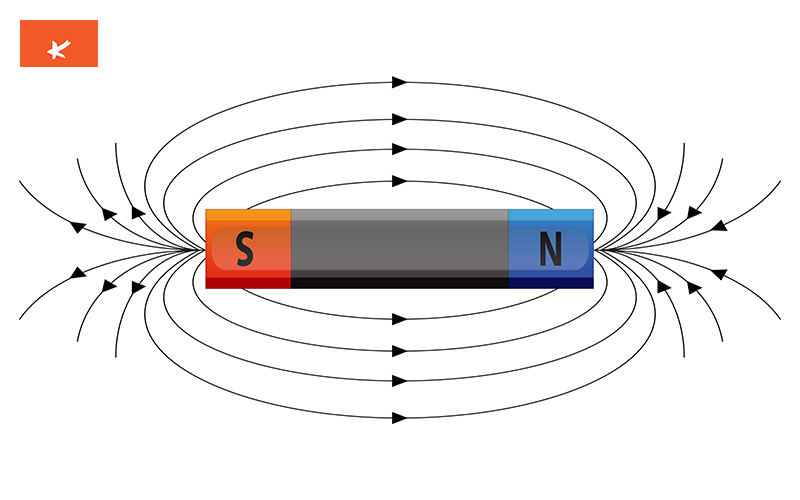
5. Electricity and Magnetism
This area of physics syllabus pulls back the curtain on the tech that powers your life — from lightbulbs to levitating trains.
You’ll begin with the basics of electrical circuits — how batteries, wires, and switches come together to light up a bulb. Then, you’ll level up into more advanced ideas like electromagnetic induction and magnetic fields.
Ever heard of Japan’s Bullet Trains (Maglev trains) that float above tracks with no wheels touching the rails? You’ll learn how magnetism makes that possible — and why the same physics is used in MRT brakes, charging cables, and even your computer’s hard drive.
It’s a mind-opening dive into the invisible forces that drive the visible world.
6. Modern Physics
Step into the fascinating world of atoms, radiation, and nuclear energy.
This topic uncovers the secrets behind:
- The sun’s energy through nuclear fusion
- Medical imaging techniques like X-rays and PET scans
- How radiation can treat cancer or detect hidden cracks in aircraft parts
But it’s not just theory — it’s highly relevant for Singapore’s future.
Did you know that PM Lee Hsien Loong attends the World Nuclear Summit? That’s because Singapore is exploring nuclear power as a clean energy source — if the technology becomes safe and small enough. You’ll gain a realistic understanding of radiation — what’s safe, what’s harmful, and how it’s already part of everyday life.
Modern Physics gives you the tools to understand the science shaping our energy future.
Why O-Level Physics is Important: Usefulness and Potential
Forget the idea of O-Level Physics being just dry rules and endless equations! It’s a powerful toolkit for tackling real-world applications of physics and building the future we want to see. It’s the key to not just using technology but truly grasping how it works. That’s why our secondary physics tuition is designed to help students connect classroom concepts with real-life understanding. Find out why the physics syllabus is more relevant than ever—for your studies, your daily life, and your future.
1. Everyday Physics: More Than Just Textbooks
Physics is everywhere in Singapore — quietly powering the devices, transport, and technology we use daily. It’s the reason:
- Your smartphone can detect taps and gestures, and stream TikToks over Wi-Fi and 5G
- Planes take off from Changi Airport, and MRT trains stay safely on track while turning corners
- Noise-cancelling headphones help you study in crowded kopitiams or public libraries
- Your microwave heats up chicken rice, and solar panels on HDB rooftops help power common areas
But physics doesn’t stop at gadgets — it’s a bridge between other subjects too:
- Mathematics
Vectors, trigonometry, and calculus describe motion, forces, and energy — from calculating how fast your lift accelerates to how cyclists race in the OCBC Cycle.
- Chemistry
Physics explains how electrons gain or lose energy — a key idea in bonding, electrolysis, and how batteries work. It’s why your Power Bank can charge your phone or how Duracell batteries help power a circuit.
- Biology
Physics explains how your muscles move when you do your NAPFA test, or how nerve signals travel when you touch something hot.
- Earth Sciences
Physics helps model rising sea levels and build flood control systems like Stamford Detention Tank. It even explains earthquakes in nearby regions that can affect Singapore buildings.
2. The Gateway to Cool STEM Careers
Thinking about your future? O-Level Physics isn’t just about exams — it’s a launchpad to high-impact, future-ready career pathways in Singapore’s growing STEM sectors. Here’s how the physics syllabus lays the groundwork:

- Medicine
Physics powers MRI scanners and X-rays in hospitals like SGH and KK Women’s and Children’s Hospital. Even lasik eye surgery uses precise laser physics!
- Aerospace Engineering
From drone delivery trials in Punggol to RSAF fighter jets, Physics drives Singapore’s aviation technology.
- Environmental Science
Physics is at the heart of solar farms in Tengah, NEA’s climate modelling, and the design of eco-buildings like Marina One.
- Electronics & IT
Physics underpins every smart traffic light, EZ-Link card, and contactless payment system. It’s the foundation for Singapore’s Smart Nation push.
Why You Should Take O-Level Physics Seriously
O-Level Physics isn’t just another subject to survive — it’s a launchpad for some of the most exciting opportunities in Singapore and beyond. Whether you’re planning to study locally, apply for scholarships, or land a high-impact job in the future, Physics gives you a powerful head start.
1. Boost Your University Applications
Thinking of applying to NUS, NTU, or SUTD for courses like Engineering, Computer Science, or Data Science? Physics is either required or strongly recommended for many science, tech, and engineering degrees.
Physics helps demonstrate:
- Logical thinking and mathematical fluency
- Problem-solving under pressure
- A solid grasp of real-world systems, from power grids to motion control
💡 Did you know?
Top local universities like NUS and NTU offer undergraduate research programs and bond-free scholarships (like the ASEAN Undergraduate Scholarship and SPRS) to students who excel in Physics and Mathematics.
2. Open Doors to High-Demand Careers
In Singapore’s rapidly evolving economy, Physics is at the heart of key growth sectors that are hungry for talent. Here’s how Physics links to real careers right here in Singapore:
🔌 Sustainable Energy & Green Engineering
Work on solar panels in Tengah’s smart town, offshore wind tech, or energy storage systems with SP Group or the Energy Market Authority (EMA). Physics concepts like thermodynamics, electrical power, and energy transfer are essential.
🚆 Transport & Infrastructure
Join LTA or SMRT to help design safer, faster trains — where Newton’s laws, friction, and vibration analysis make your morning commute smoother.
👨⚕️ Healthcare Tech & Medical Physics
Physics powers MRI, ultrasound, and radiotherapy — careers in medical physics and biomedical engineering are available at institutions like Tan Tock Seng Hospital, SGH, and A*STAR.

🛰️ Aerospace & Defence
Dream of working at DSO National Laboratories, ST Engineering, or the Republic of Singapore Air Force (RSAF)? Physics knowledge in fluid dynamics, optics, and control systems is crucial for roles in drones, aircraft, or radar systems.
📡 Semiconductors & Electronics
Singapore is home to Micron, TSMC, and GlobalFoundries. Whether it’s microchips, sensors, or communications, Physics (especially Electricity & Magnetism) is core.
🌱 Climate Science & Environmental Monitoring
Join NEA, PUB, or NParks in tackling climate resilience, flood modeling, and sustainable urban planning. Physics explains everything from heat capacity in buildings to water pressure in pipes.
3. Gain an Edge in Scholarships & Competitions
Many government and private scholarships — like the PSC Scholarship, EMA Scholarship, or Singtel Engineering Cadet Scholarship — value students who show strong STEM potential. A solid foundation in Physics helps you shine in interviews and aptitude tests.
💥 Bonus: If you’re passionate, Physics also lets you take part in exciting local competitions like:
- Singapore Physics Olympiad (SPhO)
- Shell Bright Ideas Challenge
- Tan Kah Kee Young Inventors’ Award
Bringing Physics to Life: Real-World Applications of Key Topics
How O-Level Physics Topics Connect to Real-world Scenarios
Physics truly is everywhere! From flipping the light switch in the morning to checking the weather forecast on your phone, which relies on electromagnetism and technology, physics principles are constantly in play. Identify the following core O-Level physics syllabus and see how they manifest in the world around you.
1. Measurement and Accuracy: Why Precision Matters in Daily Life
Do scientists only care about measurements? Well, you may want to think again! Precision is what keeps everything around us running fairly, safely, and smoothly.
- Supermarket Scales
When you buy “1kg” of apples, accurate digital scales ensure you’re not overpaying for 900g.
- Thermometers in Clinics
A tiny temperature difference can tell a doctor if you’re healthy or need treatment.
- Weather Forecasts
Thermometers and barometers collect data, so you know whether to pack an umbrella or sunscreen.
2. Motion and Forces: Why Physics is Behind Everything That Moves
More than just words in a textbook, Newtonian mechanics explain how everything in everyday life works.
- Driving a Car
Speedometers and brakes follow Newton’s laws to help you control motion and avoid accidents.

- Cycling
Friction between the brakes and wheels lets you stop before a disaster.
- Sports
Kick a ball too gently and it won’t reach the goal, or it may fly over when being kicked too hard. Physics helps you strike the perfect shot.
3. Heat and Energy: Why You Can’t Live Without It
Heat energy powers everything from your breakfast to your comfort. Here’s the real-life physics in action:
- Cooking
Baking a cake? Boiling water? Frying eggs? That’s heat transfer in action. Timing and temperature can make or break your dish!
- Winter Wear
Heading somewhere chilly? Your jacket traps heat through insulation, thank thermal physics for keeping you cosy.
4. Waves, Light & Sound: The Science Behind Cool Tech
Sound waves, light waves, and reflections make many of our favourite tools and gadgets work like magic.
- Mirrors and Periscopes
Light bounces off surfaces. This means you can check your outfit or peek over walls as you wish.
- Ultrasound Scans
Doctors use sound waves to safely see what’s going on inside your body. Never underestimate the relationship between science and healthcare!
5. Electricity and Magnetism: The Power Behind Modern Life
It’s easy to overlook just how fundamental electricity and magnetism are to our modern lives. These two interconnected forces play a role in lighting up our homes, powering quick digital payments, and enabling many everyday conveniences we often take for granted.
- Home Circuits
Circuit breakers stop dangerous surges before things get fiery. Well-cared-for home circuits means a safe household.
- Magnetic Locks
These secure your doors with electromagnetism. Burglars? Not today.
- Credit Cards
The magnetic strip on your card is loaded with encrypted data. This allows you to pay with a simple tap.

Everyday physics makes the ordinary extraordinary. Understanding how the world works is empowering. Remember, the more you learn, the more you notice.
What are the Essential Skills for Applying Physics in Real Life?
It’s safe to say that O-Level Physics is an investment in developing fundamental thinking, questioning, and problem-solving abilities that will serve you throughout your life. The skills you gain in the physics syllabus are transferable and highly valuable, extending well beyond the science lab. Here’s what you’re really taking away:
1. Problem-Solving and Critical Thinking
Ever wondered why your Wi-Fi lags in just one corner of the room? By mastering the core concepts in the physics syllabus, you’ll be able to solve a mystery like a detective. Through O-Level Physics, you’ll learn how to:
- Break down complex problems into smaller, manageable parts.
- Apply logic and reasoning to find practical solutions.
- Build confidence in troubleshooting real-life situations.
2. Observation and Analytical Thinking
Physics trains you to see the world differently. It’s like turning on a hidden layer of reality—where every swing, sound, and splash has a reason.
- Spot patterns and trends in how things move, react, or change.
- Connect the dots between cause and effect in everyday situations.
- Ask the right questions: “Why did that happen?” and “What if…?”.
Suddenly, things that used to seem “random” make total sense. This also showcases the power of analytical thinking.
3. Math Skills (Yes, You’ll Need Them!)
Don’t panic as this isn’t about doing calculus in your sleep. It’s about using math as a tool to understand and quantify the world.
- Learn how to interpret graphs, calculate energy, or estimate time.
- Understand the relationships between variables like speed, distance, and time.
- Use formulas not just to solve questions, but to understand them.
Both math and physics syllabi go hand-in-hand, and together, they help you find real-world answers to everyday questions.
4. Scientific Inquiry and Experimentation
This is where curiosity meets creativity. Physics gives you the freedom to question the norm, test your ideas, and learn by doing.
- Design and conduct experiments to test hypotheses.
- Collect and analyse data to reach conclusions.
- Learn from failure and improve your approach. In other words, it’s real-life learning!
From simple pendulum experiments to measuring the resistance of wires, you’ll be learning like a true scientist.
5. Using Technology Like a Pro
Today’s world runs on physics. The technology you use daily? It’s all powered by scientific principles.
- Understand the physics behind smartphones, GPS, cameras, and more.
- Explore how energy, waves, and circuits power modern innovations.
- Get inspired to design or invent future tech with a solid scientific foundation.
The better you understand physics, the more you’ll appreciate the science behind your favourite gadgets. Who knows? You may even create your own someday.
From navigating daily life to launching future careers, the skills you gain from the physics syllabus go far beyond the exam paper. In fact, you’re training your brain to think smarter, observe deeper, and solve problems like a pro!
Frequently Asked Questions
1. How can Physics help me in my future career?
- Physics lays the foundation for many exciting and high-demand careers in Singapore and beyond. It’s essential for fields like:
- Engineering (civil, mechanical, aerospace – think LTA, ST Engineering, SIA Engineering)
- Architecture and Urban Planning
- Healthcare (e.g., radiology, medical imaging, biomedical engineering)
- Technology & AI Development
- Green Energy & Environmental Science (e.g., working with NEA or PUB)
The Physics syllabus trains you in problem-solving, analytical thinking, and data interpretation — core skills valued in any future-proof profession.
💡 Struggling to connect the dots? Our Physics tuition helps make it all click, step by step.
2. How does O-Level Physics prepare me for further studies in science and technology?
O-Level Physics is your gateway to higher learning in many science and tech disciplines. It builds the foundation for:
- A-Level Physics or H2 Physics
- Polytechnic science & engineering diplomas
- University degrees in Engineering, Computing, Life Sciences, and even Medicine (e.g. NUS, NTU, SUTD)
By understanding key topics like motion, forces, energy, and waves, you’re better prepared to handle complex systems and applications in future studies — and life.
3. What are some common challenges students face in O-Level Physics?
You’re not alone if you’ve faced any of these:
- Finding it hard to visualise abstract concepts like electromagnetic fields or radiation
- Struggling with the math side of physics — especially formula rearrangement and algebra
- Confusion when trying to apply theory to practical questions
- Feeling overwhelmed by the fast-paced syllabus
🎯 At Kungfu Physics, we break things down clearly, build confidence through practice, and guide you through exam-smart strategies.
Final Thoughts
Ready to trade confusion for clarity and turn physics stress into strength?
At Kungfu Physics, we don’t just help you survive O-Level Physics — we train you to master it. Whether you’re struggling with formulas, forces, or fundamentals, our program equips you with the skills, mindset, and momentum to thrive.
If you’re just starting your journey, our Sec 3 Physics tuition lays the foundation for success by strengthening core concepts early and building confidence. With our battle-tested curriculum, engaging lessons, and a deep understanding of the Singapore syllabus, you’ll learn faster, think deeper, and perform better.
Join our community of students who’ve gone from uncertain to unstoppable — one formula, one breakthrough at a time.
👊 Don’t just learn physics. Conquer it.
Become a Physics Warrior — only at Kungfu Physics.
Contact us and let’s rocket you to success!
